
Reflections on the 68th Grammys: Artists Speak Out on Immigration and Tyler, The Creator’s Meaningful Lyric Change
Updated: Feb 3
This year’s Grammys were full of notable highlights. From the outfits (I, for one, loved Chappell Roan’s bodysuit) to the performances (more on Tyler, The Creator’s later), it was one of my favorites in recent years. I also enjoyed that there were no major sweeps this year, which made each award feel more earned.
Despite all this, awards shows can feel tone deaf and closed off from the realities beyond their own bubble, making those involved seem detached from broader social and political unrest.
At the Grammys this past weekend, however, many artists chose to acknowledge and speak out against ICE and the U.S. immigration crackdown. Several musicians – such as Billie Eilish and her brother Finneas – wore “ICE Out” pins on the red carpet and onstage, signaling protest even before speeches began. Eilish also used her acceptance speech for Song of the Year to declare that “no one is illegal on stolen land,” urge continued activism, and conclude with an explicit condemnation of ICE.
Bad Bunny, who made history as the first Spanish-language artist to win Album of the Year, opened his own acceptance speech by demanding “ICE out,” emphasizing shared humanity and calling for love over hate in the face of immigration enforcement.
Olivia Dean, upon winning Best New Artist, framed her success through her family’s immigrant roots, honoring the bravery of those who came before her. Kehlani also used their moment in the spotlight to denounce ICE and advocate for immigrant recognition, while others, including Justin Bieber, Hailey Bieber, visibly supported the protest by wearing symbolic pins throughout the night. – Emma Zoe Polyak
Tyler, the Creator is no stranger to the spotlight, whether it’s for his offbeat comments or his distinctive artistry in the rap world. 2025 was a whirlwind year for Tyler; he just finished his Chromakopia world tour, dropped his new album Don’t Tap The Glass, and headed straight to the big screen for his pivotal role as Timothee Chalamet’s confidant in Marty Supreme. After a year like that, fans are constantly on their toes to see what’s next for Tyler.
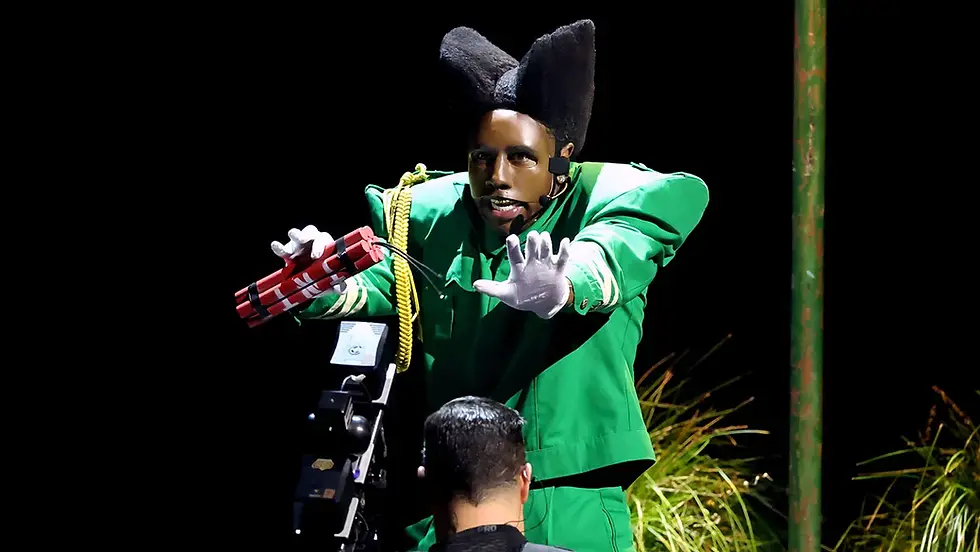
At the 68th Grammy Awards, Tyler was nominated for 6 Grammys (album of the year, best rap album, best alternative album, best rap performance, best rap song, and best album art). As Tyler, The Creator won Best Album Art for Chromakopia earlier in the night, fans and attendees were more intrigued by his live performance at the award ceremony. Theatrical by nature, Tyler walked through the crowd with a troop of dancers dressed as soldiers who were chanting, “You don’t want to go to war with a soldier.” As he took the stage, he dismissed the “soldiers” from the stage, the screen shifted to black and white, and the beat of his song from Chromokopia, “Thought I was Dead” started to play. This song originally focuses on Tyler’s rap culture and comments on how much he has changed over the years.
Whether the Grammy Organization knew it ahead of time or not, Tyler changed the song’s lyrics to be more politically charged in response to the current state of America’s government. As he states, “Y’all mind made up, I’m the bad guy,” addressing America’s racism against people of color that is seemingly at an all-time high. He then adds, “How many lives I’ve changed? / Billionaires made? / Surprise, the room is black.“ This verse is twofold: not only does he acknowledge the impact of his own work and that of other successful black artists, but he also emphasizes the importance of black voices in music. Black voices in America will never be silenced, and Tyler advocates for others to speak out against this. The same verse questions the impact of billionaires on the general public. Tyler is implying that their impact with money could never match the impact of music.
Later in the song, he says, “Pros and Cons / Ignore, respond, defend or give accountability / All y’all hot takes got me chilly,” directly addressing cancel culture and how to address it in a political climate marked by so much hostility. Earlier in both versions of the song, Tyler admits he has made mistakes and states he has changed his ways. In this verse, he weighs his options for responding to controversy at a time when many artists’ careers are ruined by the public's perspective about what is “right” or “wrong.” Everyone has an opinion, or “hot take,” that is often seen as controversial and may not be well-received by the public. Thus, his line, “All y’all hot takes got me chilly,” speaks to his irritability with everyone’s opinion and all the noise he receives from his work. Although the song’s performance was shortened to around two minutes, the impact of the lyrics did not diminish. Tyler, The Creator is no stranger to controversy in his career, as he has been releasing music for around two decades. He used his performance on music’s biggest stage to amplify the black experience in America and give a voice to those who aren’t given one. – Sarah Bruno
While there is always more that can be done – and many artists continue to stay silent despite their platforms – these moments mattered. At a ceremony so often criticized for its insularity, the willingness of artists to engage directly with urgent political realities felt both necessary and overdue.
As music fans and journalists at Zany Waves, we believe that art does not exist in a vacuum. We wholeheartedly stand with immigrant communities and support the call to abolish ICE, recognizing that music’s power lies not only in celebration, but in solidarity.


